A History of The Gardens
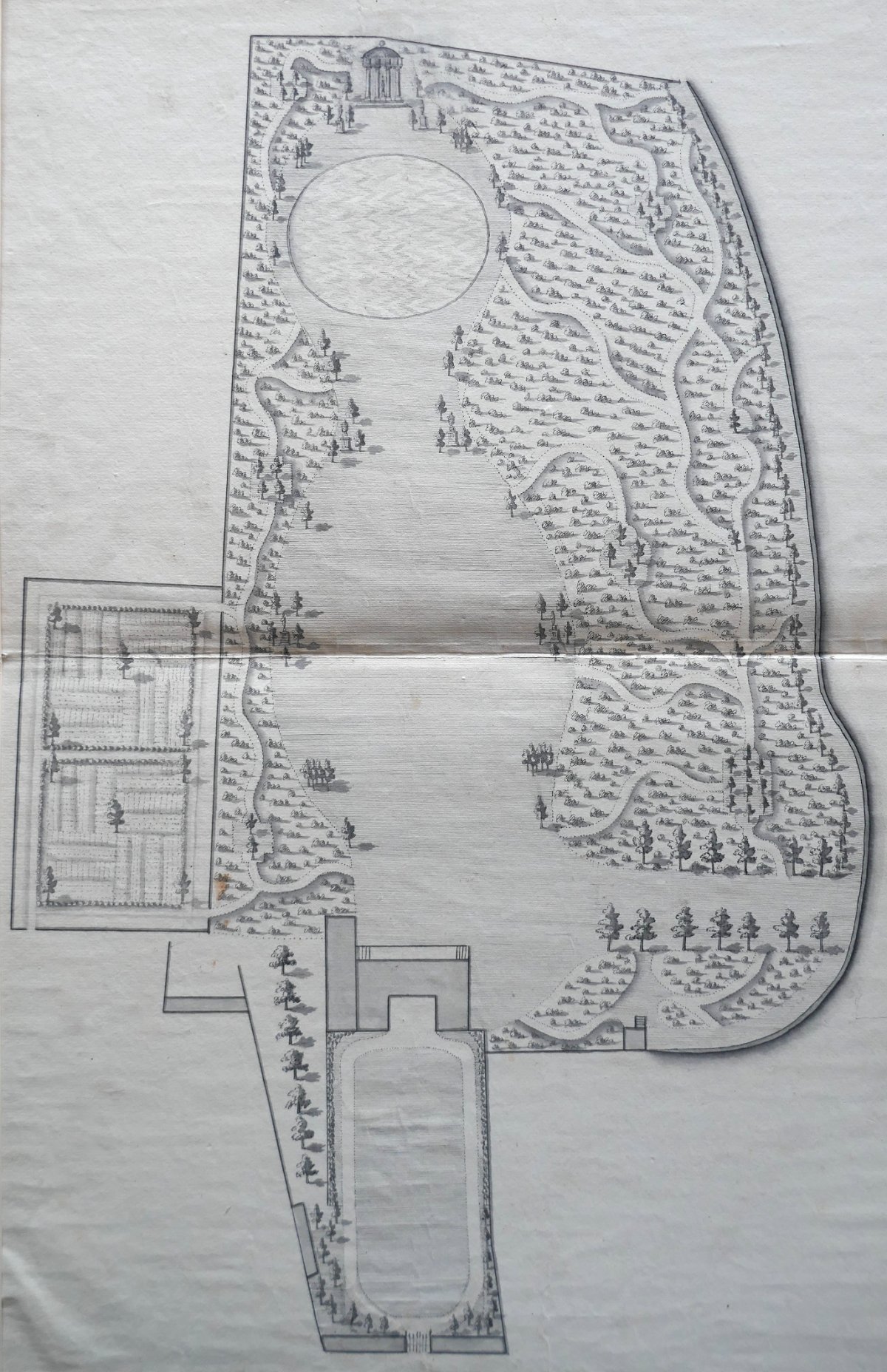
On acquiring Corsham House (as it was then known) in 1745, Paul Methuen set about remodelling not only his mansion but also its setting. Plans by ‘Greening’, quite possibly the Royal Gardener Thomas Greening, were submitted in 1747-9 and further plans done a couple of years later by a designer named Oram. At this time, three avenues of elm trees radiated from the house to the north, south and east respectively. In addition, there were a series of pools (or stew ponds) to the the north and north east.
A breakthrough came in 1760, when Paul Methuen commissioned Lancelot "Capability" Brown to extend the house itself and devise a design for the landscape. Brown was a strong advocate of the Landscape Movement, taking direct inspiration from William Kent whom he worked under at Stowe. Favouring a more naturalistic approach, his pastoral settings involved creating and enhancing landscapes to look naturally beautiful. He used purposefully sited follies, water features and tree plantations to guide the eye across his landscapes and best show off the country houses that sat in them. Brown was at the very pinnacle of his career in 1760, and his confidence is reflected in his radical treatment of Corsham. Little is known of the gardens that existed prior to his appointment by Paul Methuen. It is known, however, that Brown was responsible for the following:
- Separating the park from the formal gardens, through the creation of a ha-ha (sunken ditch) to prevent livestock from entering the park whilst still allowing the same uninterrupted view.
- The creation of a ‘Great Walk’, now known as the North Walk both devised and planted by Brown.
- The siting of a lodge at the end of the North Avenue
- The planting of numerous specimen trees in the gardens including cedars, yews and most notably the Oriental Plane, now recognised as the largest spreading tree in Britain.
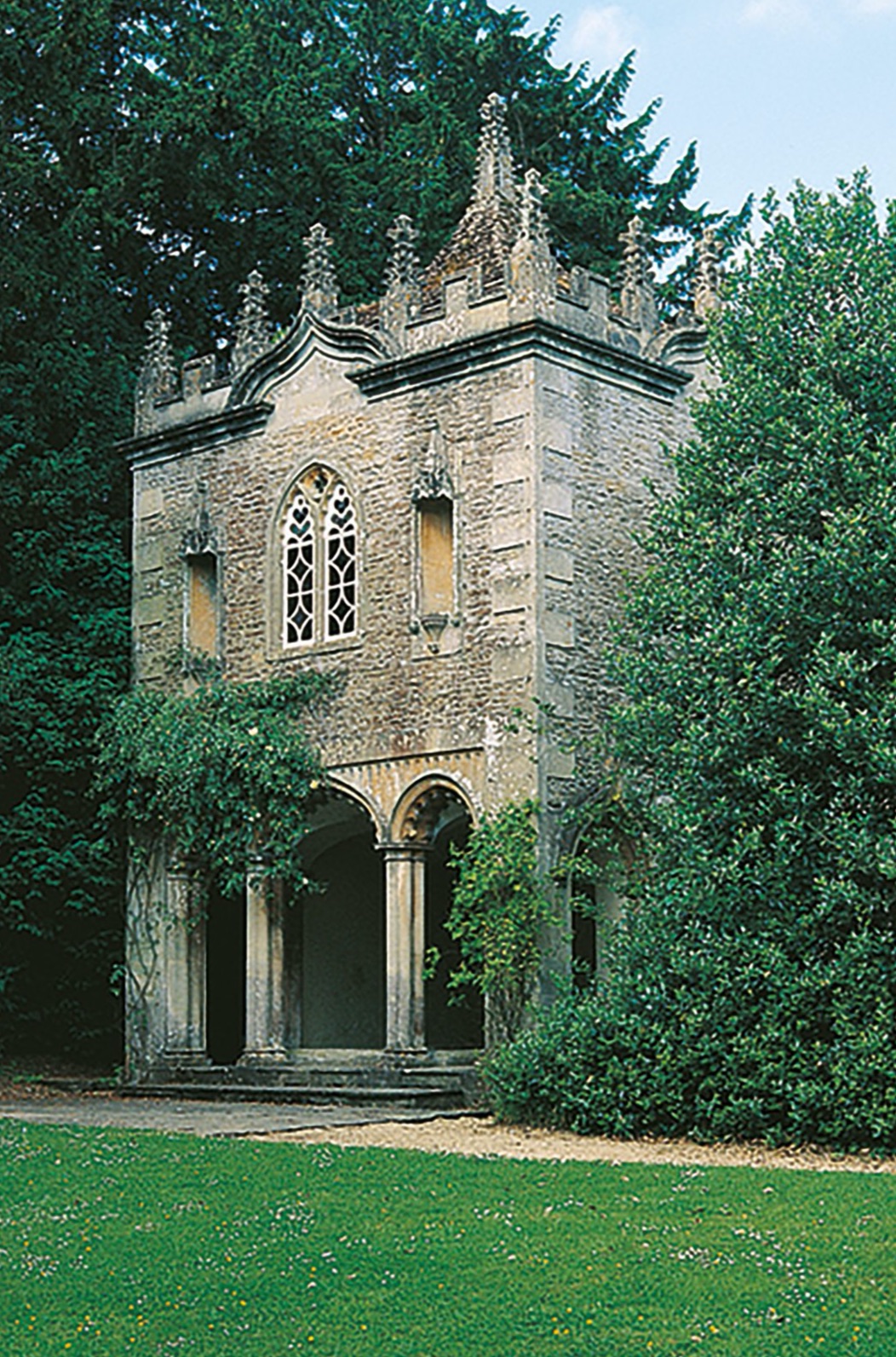
- The construction of the gothic Bath House, still present in the gardens today.
- An orangery with stucco work, unfortunately demolished.
Brown's Bath House
Of the three architectural works designed by Brown for the gardens, it is only the Bath House that stands testimony to his commission. It was remodelled by John Nash between 1797 and 1802, who Gothicised the picturesque building and altered the front arches. The cold bath was last frequently used by the Field Marshal who died in 1932. Above is a dressing room (not open to the public) with stained-glass windows, visible from outside.
During the closing years of the Eighteenth Century, Humphry Repton (a follower of Brown's theories on landscape gardening) was appointed by Paul Methuen's son and heir, Paul Cobb Methuen. He went some way towards picking up the mantle of Brown, continuing the Landscape Movement and clashing with the more dramatic Picturesque.
At Corsham, Repton was brought in to complete Brown's work that had commenced some forty years earlier. Though he had a strong interest in architecture Repton was not an architect, and so introduced John Nash, his business partner, to the Methuens. Nash was to re-fashion the external north side of the house; he created an ambitious gothic design with flying buttresses and steeply gabled roof punctuated by pinnacles and parapets. Repton thought that such dramatic architecture was best complimented by a contrast of round-headed trees. He planted a clump of horse chestnuts on the North Front, a black walnut, copper beeches and turkey oaks. These plantings were interspersed with decorative trees including indian bean and cherries.
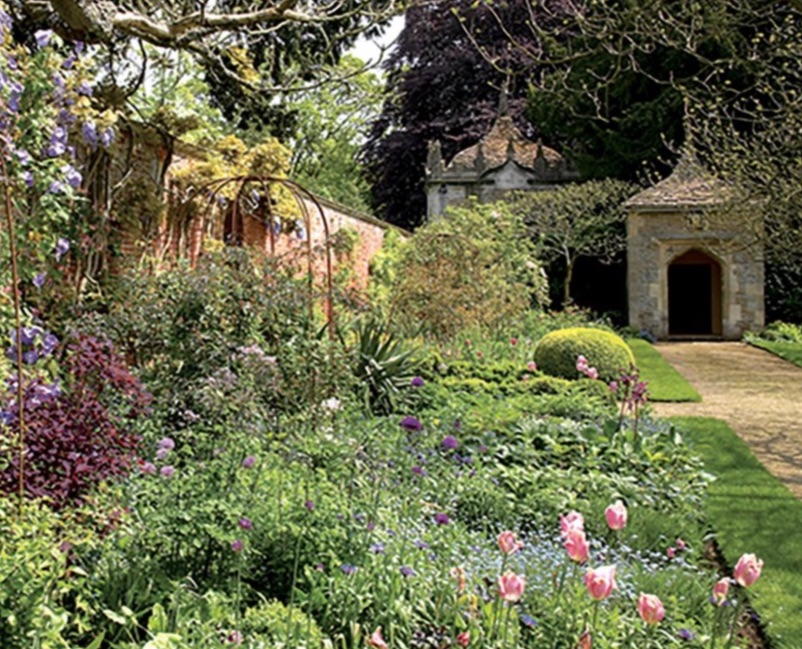
It was the Lady Jane Dorothea Methuen (d. 1846), the first Lord Methuen’s wife, who was responsible for the basic layout of the flowers in the formal areas of the garden. She incorporated part of the former kitchen garden into the pleasure grounds with the help of a German gardener called Wachter, moving some walls to create a semi enclosed area in the Lily Pond Garden.
In the time of the second Lord, the massive yew hedge, which frames the South Lawn and stretches along Corsham High Street up the perimeter wall, was planted (circa 1840).
At Corsham, Repton was brought in to complete Brown's work that had commenced some forty years earlier. Though he had a strong interest in architecture Repton was not an architect, and so introduced John Nash, his business partner, to the Methuens. Nash was to re-fashion the external north side of the house; he created an ambitious gothic design with flying buttresses and steeply gabled roof punctuated by pinnacles and parapets. Repton thought that such dramatic architecture was best complimented by a contrast of round-headed trees. He planted a clump of horse chestnuts on the North Front, a black walnut, copper beeches and turkey oaks. These plantings were interspersed with decorative trees including indian bean and cherries.
It was the Lady Jane Dorothea Methuen (d. 1846), the first Lord Methuen’s wife, who was responsible for the basic layout of the flowers in the formal areas of the garden. She incorporated part of the former kitchen garden into the pleasure grounds with the help of a German gardener called Wachter, moving some walls to create a semi enclosed area in the Lily Pond Garden.
In the time of the second Lord, the massive yew hedge, which frames the South Lawn and stretches along Corsham High Street up the perimeter wall, was planted (circa 1840).
His grandson, the fourth Lord, had a very strong influence on the gardens at Corsham. As an avid gardener and plant collector he contributed significantly to the specimen trees, planting various magnolias, as well as many flowering shrubs and roses, still in the gardens today.